
Adesola Idowu, popularly known as Weird MC, has enjoyed a music career spanning over three decades. Dubbed the “Rappatainer,” she is considered Nigeria’s first female rapper and one of the few women linked to the Afrobeat genre. After starting in a girl group, she found solo success with hits like “I Wanna Make You Jack,” “Allen Avenue,” and the iconic “Ijoya,” blending Afrobeat and hip-hop in English, Yoruba, and Nigerian Pidgin.
Beyond her musical talent, Weird MC’s masculine style – short afro, baggy clothes, makeup-free face, and the occasional hat – challenged norms in a conservative culture where female artists are often expected to exude sex appeal. Her tomboyish image and private life sparked speculation about her sexuality, including rumours of same-sex relationships.
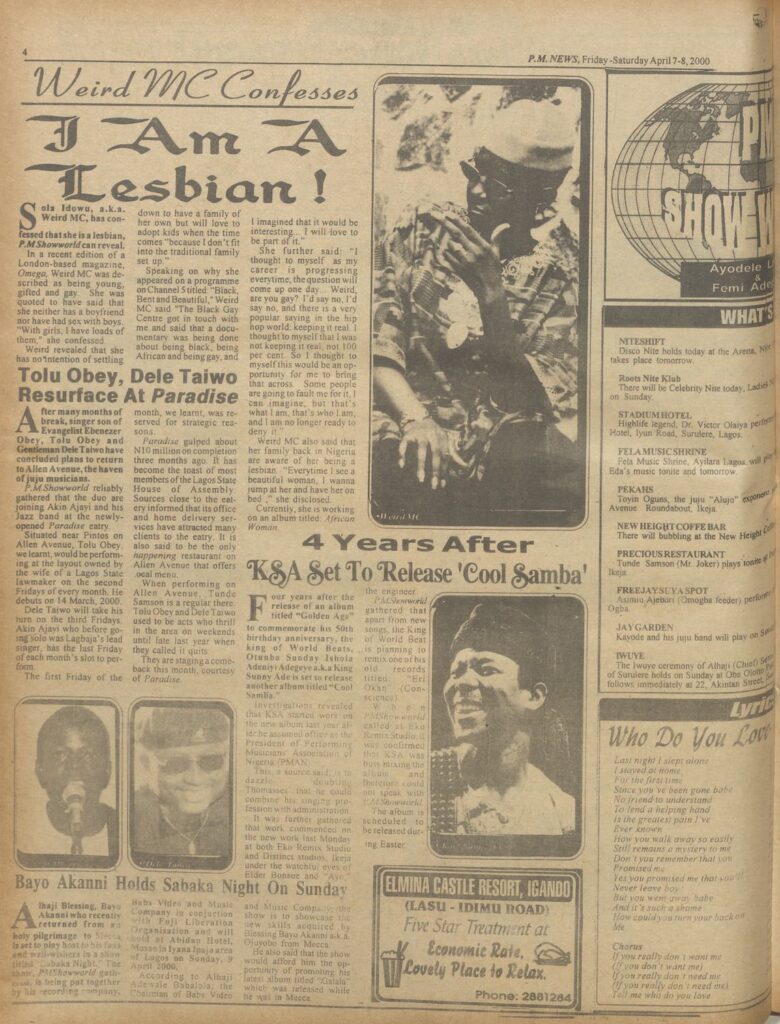
Despite her pioneering role, Weird MC and other female rappers have not matched the consistency or longevity of their male peers. Could her perceived lack of femininity and recent turn to born-again Christianity have influenced her career’s trajectory? In a male-dominated industry, Weird MC was ahead of her time. She stood out, created her own lane, and redefined what it meant to be a woman in Nigerian music – but not without risk.